

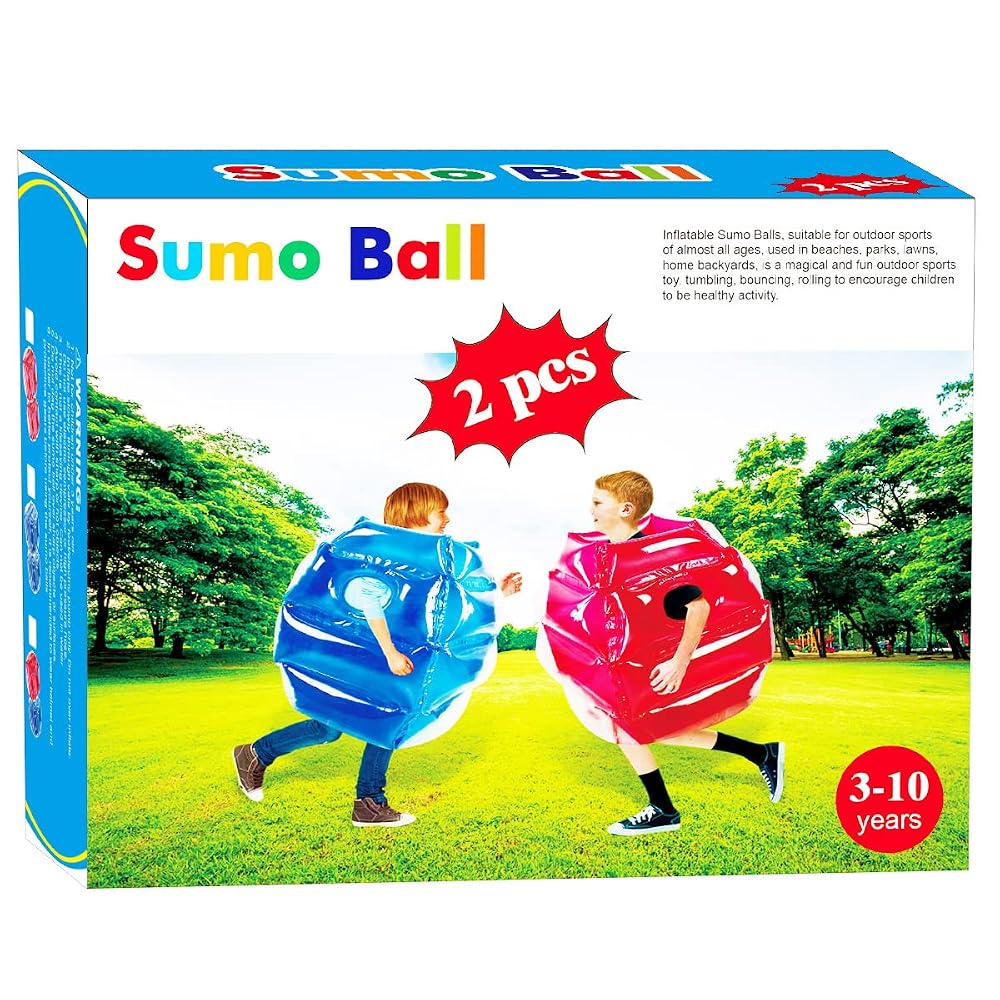
Inflatable bumper balls for the lawn, in three sizes
Eight listings, three diameters and one simple rule: the shell has to fit the space before it fits the player.
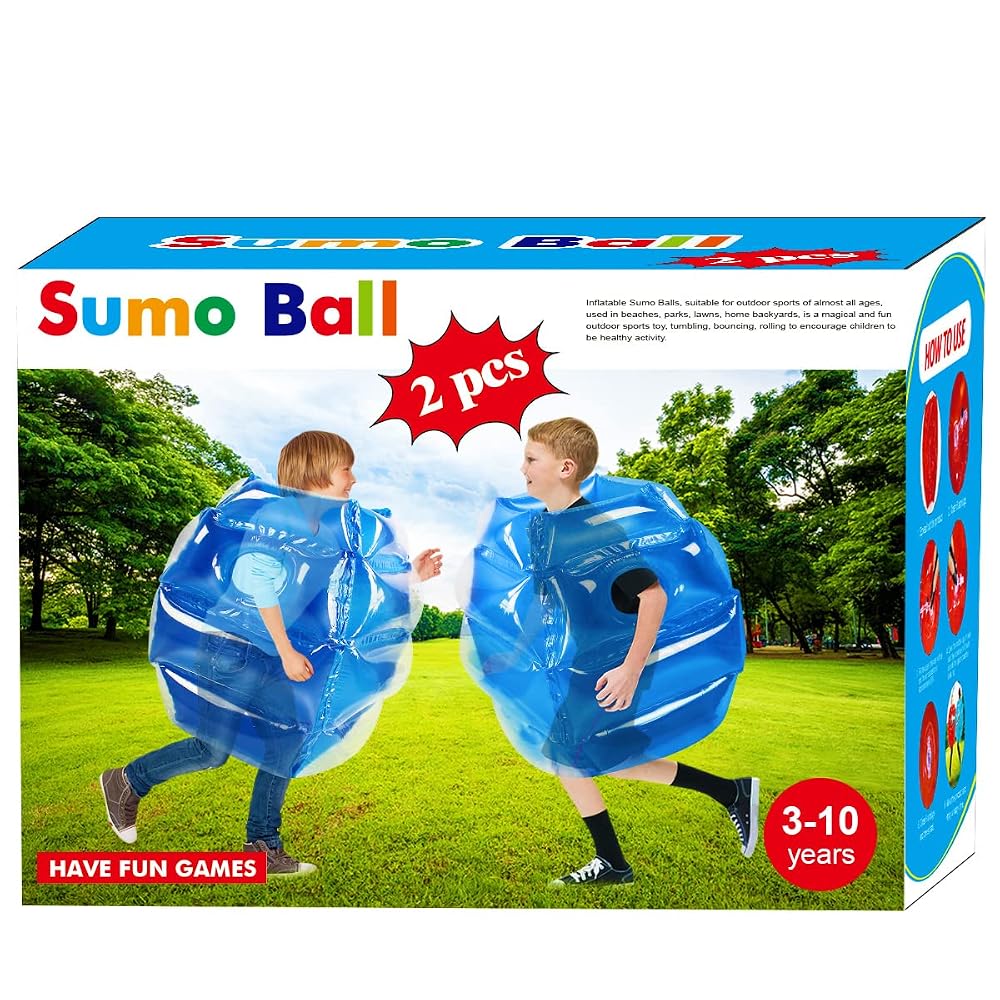
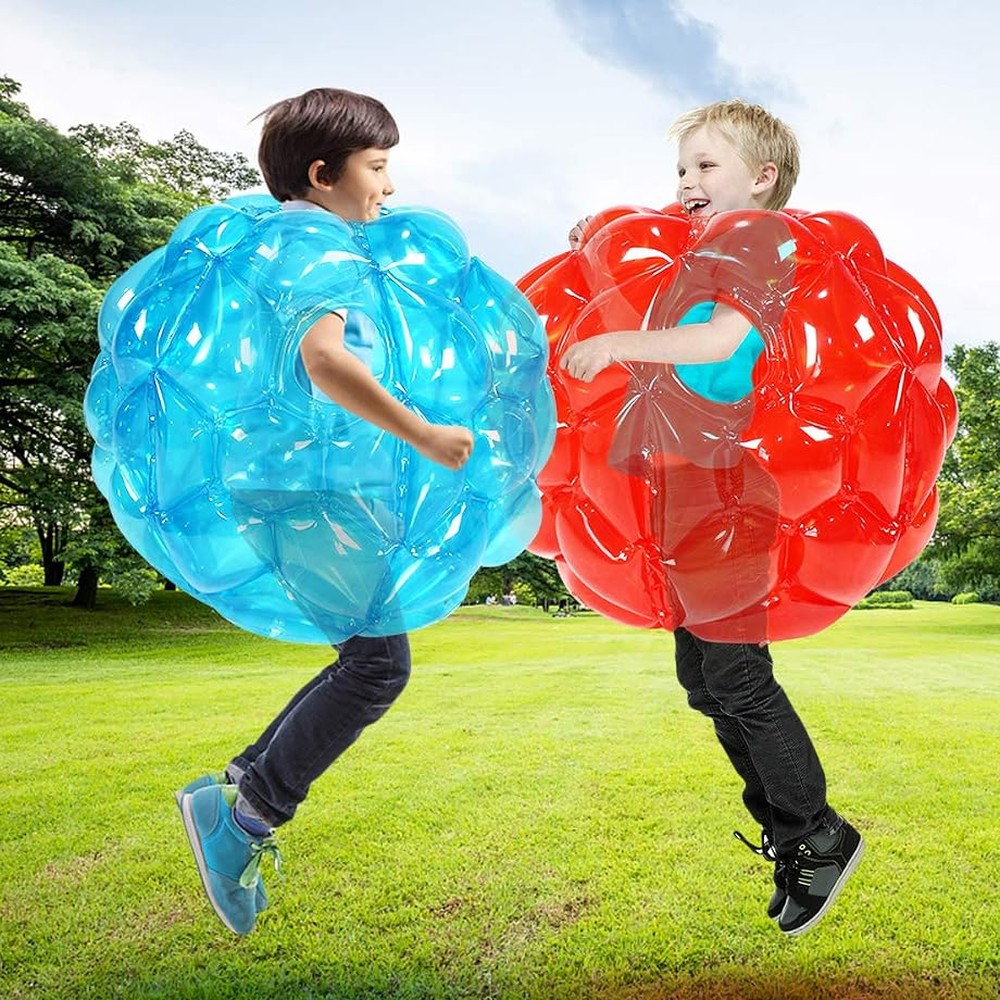
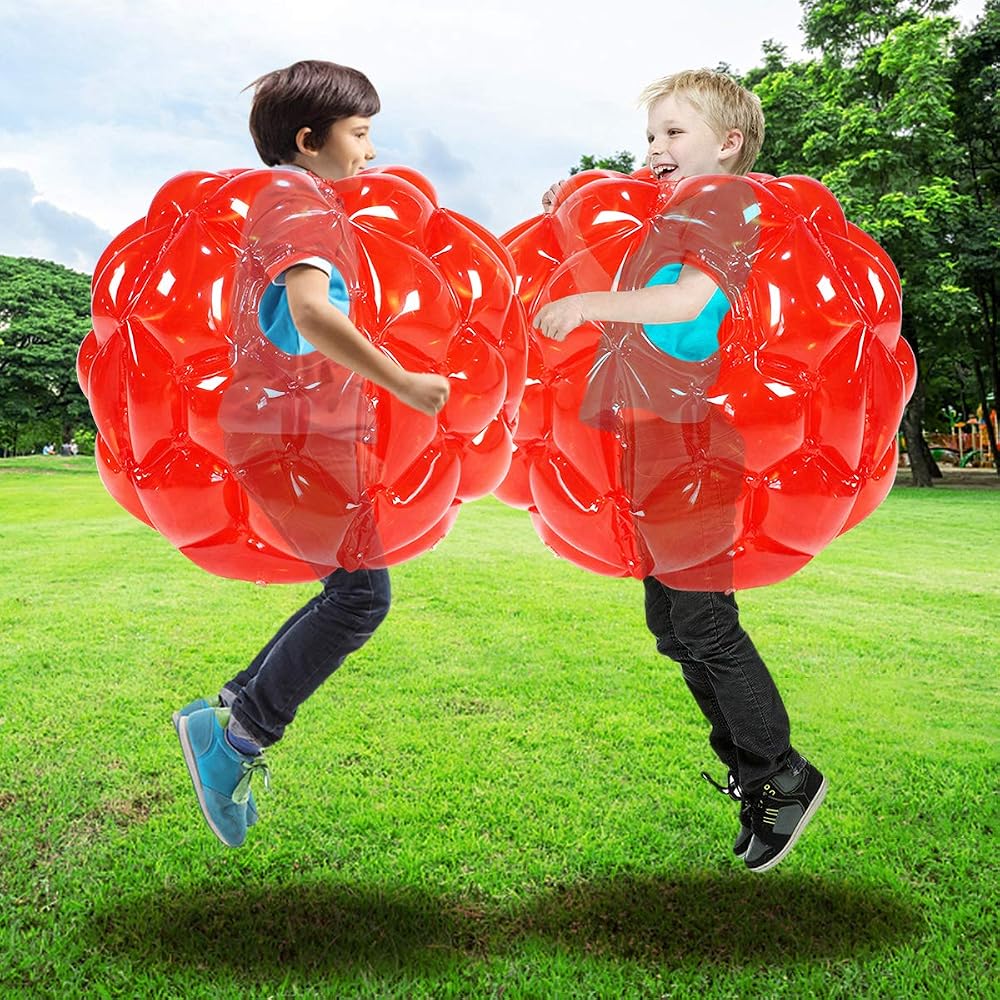
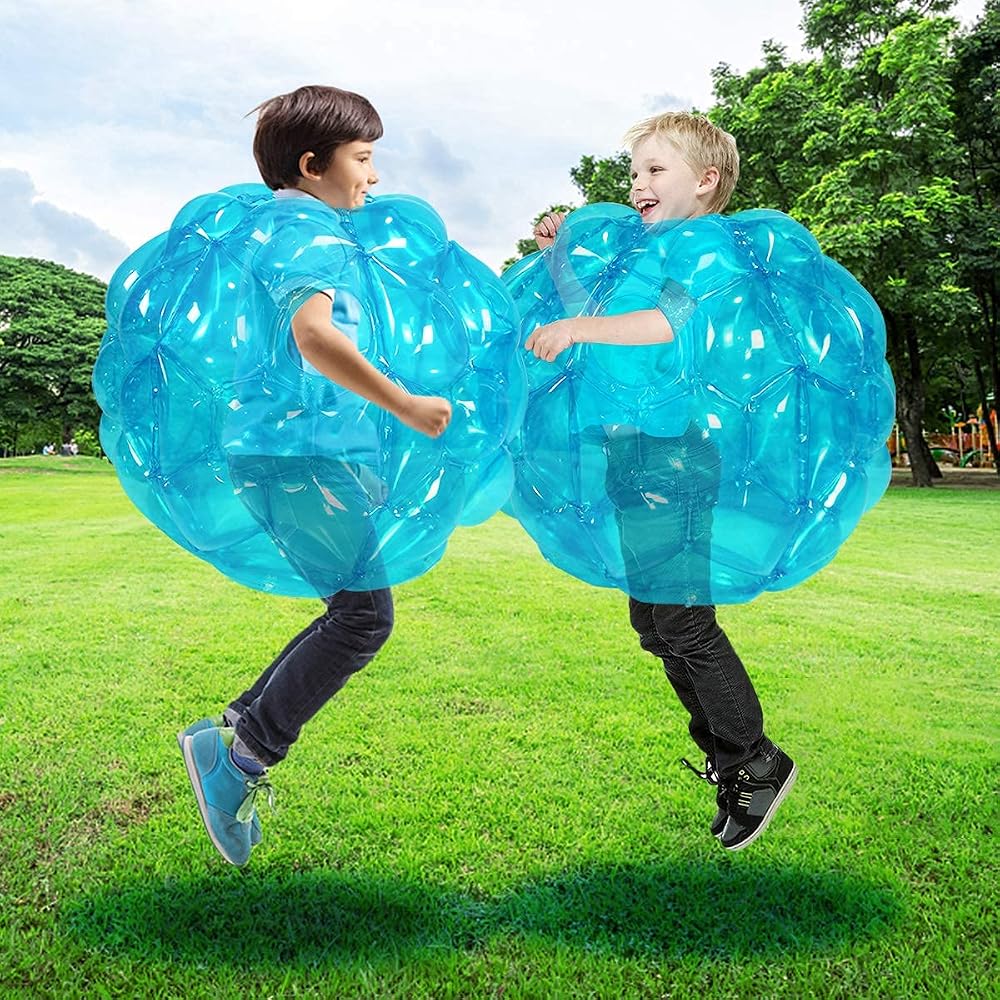
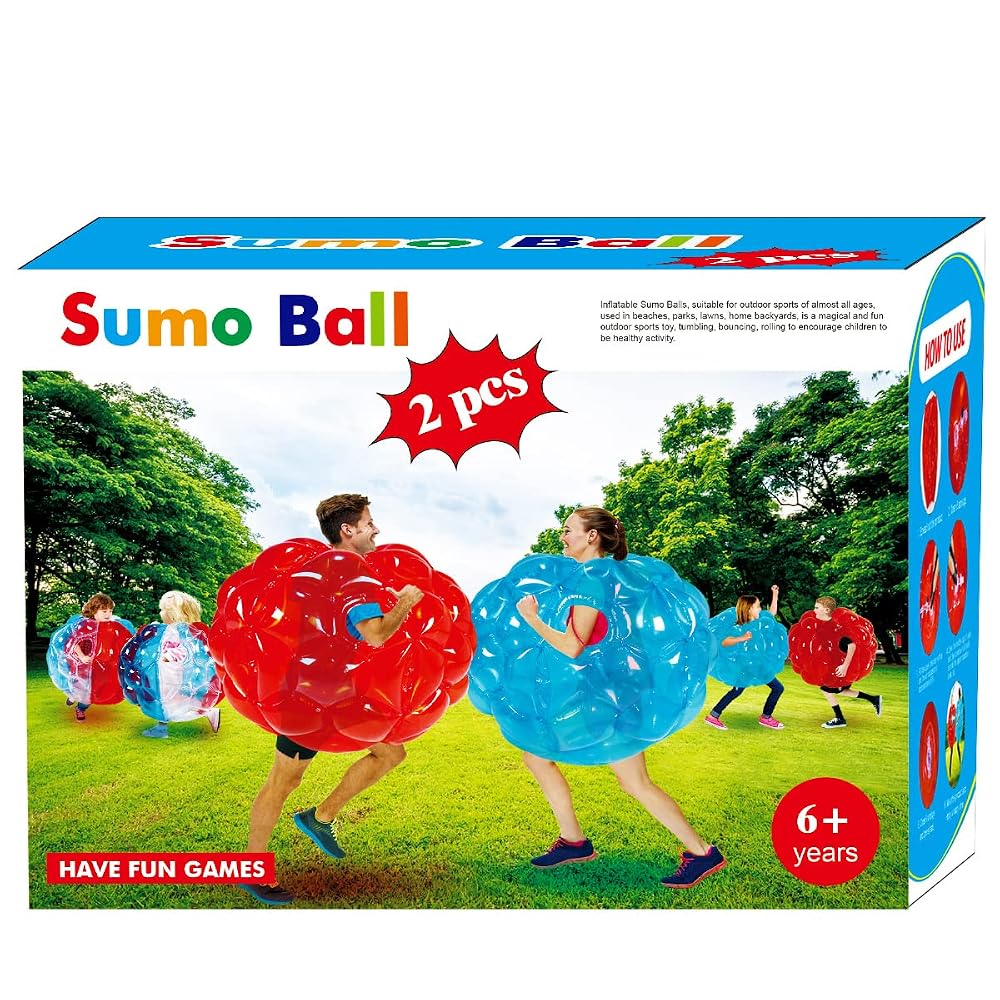
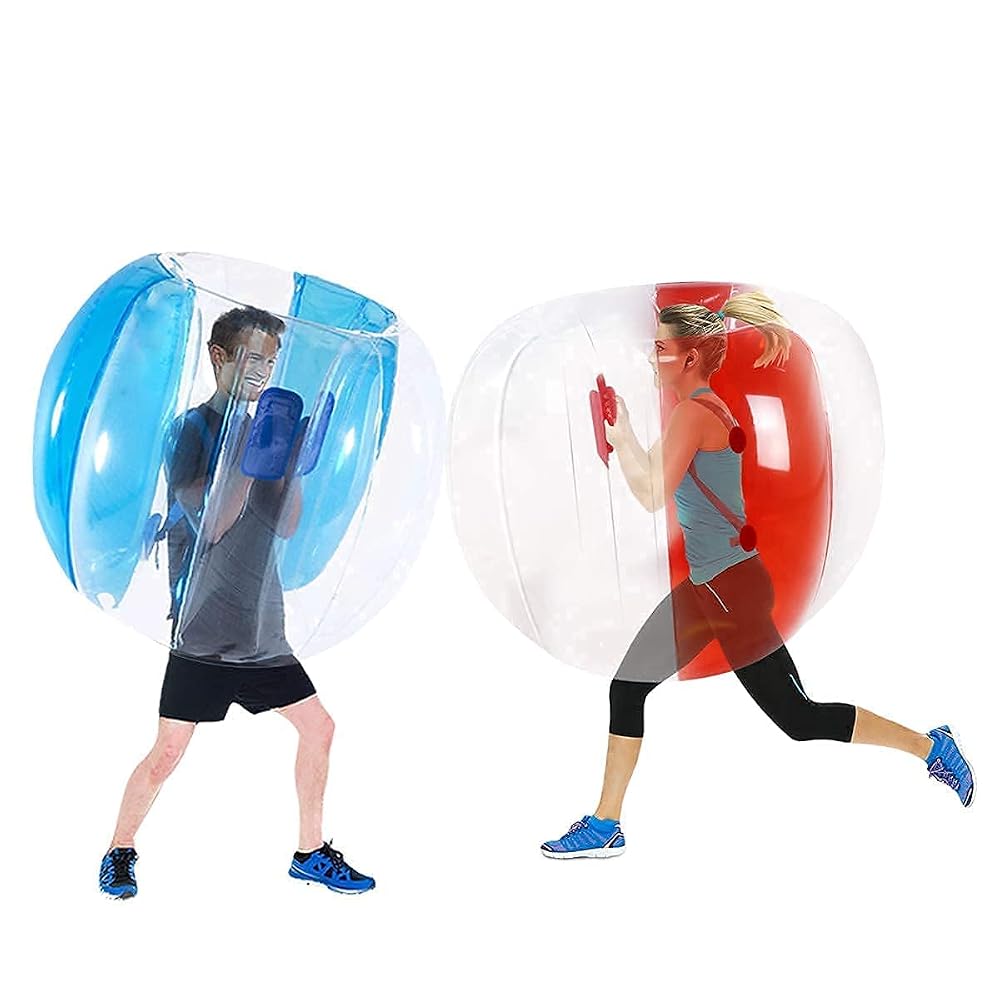
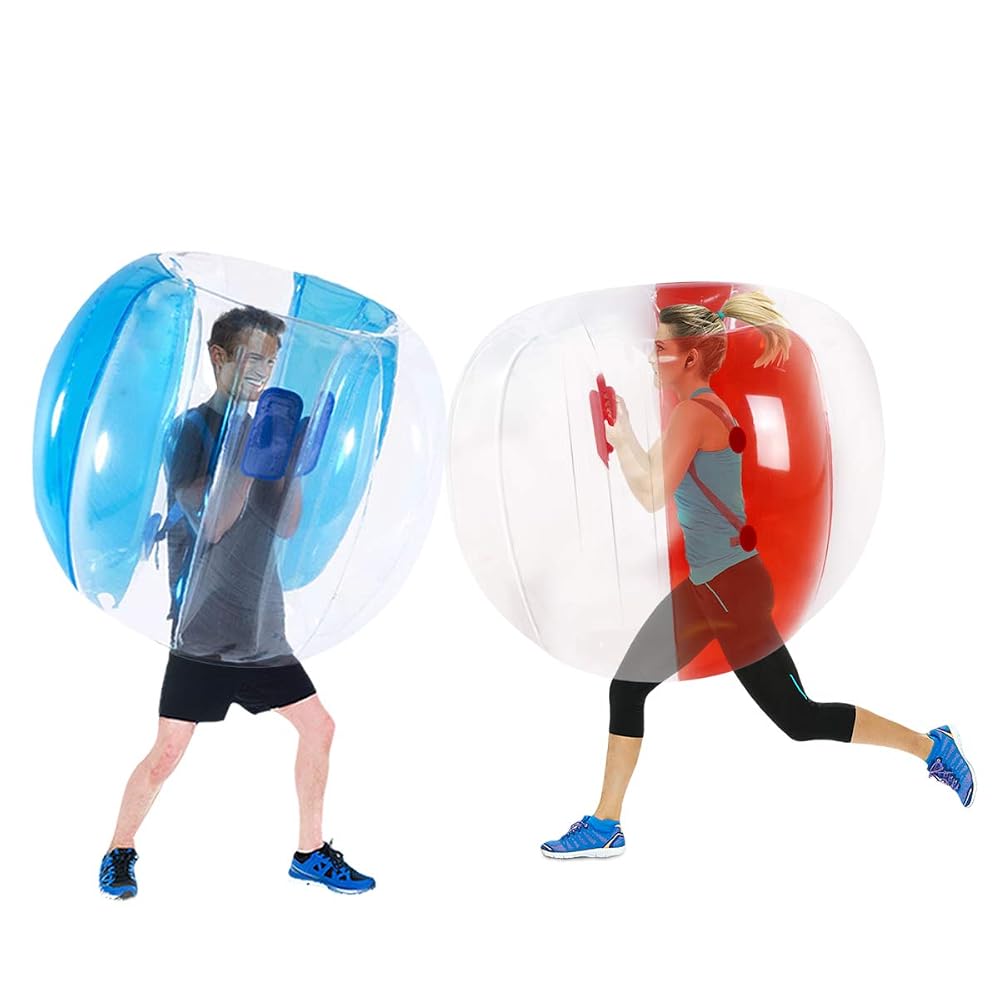
Inflatable bumper balls are the reason most people find this brand at all, and they are the shelf we know best. A pair of bumper balls is two wearable vinyl shells with padded shoulder straps and two handles inside. You step in, you grip, you run at a friend, and the air does the rest. Nothing on this page is sold singly; bumper balls come in twos, because one ball is a prop and two balls are a game.
Sizes decide everything else. The 24 inch bumper balls are the smaller end of the shelf and the only ones we would hand to kids without a second thought. They inflate fast, they fit a normal backyard, and children from about seven can carry one for a full afternoon of play. The 36 inch shells sit in the middle: bigger, slower, far more dramatic, and happiest on an open field. The 48 inch bumper balls are adult gear, and the fun there is the weight of the collision rather than the speed.
Plan the air before you plan the game. Every pair of inflatable bumper balls arrives folded flat, and the first inflate is the longest. An electric pump fills one shell in roughly four minutes; a foot pump takes about fifteen and really takes two people, since somebody has to hold the valve open while the other pumps. Overfilling is the single most common way to ruin a new shell, so stop when the vinyl is firm but still gives under a palm.
The straps are adjustable on every pair we list, which matters more than the size chart suggests. A shell that hangs too low turns a run into a stumble; one cinched too high lifts a smaller player off the grass on impact. Set the straps so the shoulder pads carry the weight and the handles sit at chest height, then let the first few minutes of play tell you whether to tighten them.
Outdoor surfaces only. Grass is ideal, packed sand is fine, and a padded gym floor works if the perimeter is clear. Mark the field wider than you think you need, keep spectators behind the line, and give the game a referee, because people inside bumper balls genuinely cannot see much to the side. Ages seven and up, with an adult watching, is the standard we apply across the shelf.
Treat the shells as repairable, not disposable. Each pair ships with patches, and a slow leak is usually a seam that needs a patch rather than a ball that needs replacing. Deflate from the valve rather than squeezing the air out, fold loosely, and store the pair somewhere dry and out of direct sun. Done that way, a set of bumper balls will outlast several summers of hard outdoor fun, and the only thing you will enjoy replacing is the pump.
Sizes, ages and the people in the garden
Three sizes cover almost every game anyone plays with these: twenty-four inches for kids, thirty-six for a mixed group, forty-eight for adults who want to be knocked over properly. The ages are a guide and not a rule — a tall eleven-year-old is happier in the thirty-six inch shell than in the smaller one, and a short adult can play the whole afternoon in it.
Count the people before you count the balls. Two shells keep four people busy, because half the fun is watching and the rounds are short. Six or more and you want a bracket, which is why the matched pairs exist. Whatever the number, the thing that decides whether the activities last an hour or five minutes is the ground: flat grass, no slope, nothing hard within a good run of the edges.
Air is the other half of the job. A foot pump will fill a twenty-four inch shell while you talk; an electric pump does the forty-eight inch pair in the time it takes to carry the cool box out. Inflate until the shell holds its shape and stops there, because a drum-tight ball bounces players harder than they expect and the seams take the difference. Our standards for this shelf are simple: an adjustable harness, two inside handles, and a patch in the box.
Questions about this shelf
Why are bumper balls so expensive?
Almost all of the cost is vinyl thickness and seam work. A shell has to survive adults running into each other, so the material is heavier than a pool toy and every seam is double welded. Prices also move with size, which is why a 48 inch pair costs roughly twice a 24 inch pair.
How much room does a game need?
For 24 inch shells, a lawn about the size of a two-car driveway is enough for two players. For 36 inch shells, plan on a clear area at least fifteen paces across. For 48 inch shells, use a field.
Can two people share one pair?
Yes, and most families do. The straps adjust quickly, so a pair can pass between kids and adults between rounds without tools.
What is the difference between a zorb ball and a bumper ball?
A zorb ball in the strict sense is a large sphere you climb inside and roll down a slope. On this shelf the two words are used interchangeably for a wearable shell, which is the only kind we list.