

Punching bags and training dummies that bounce back
Three listings for three different kinds of practice: a free standing bag, an inflatable bag and a dummy that stands in for a defender.
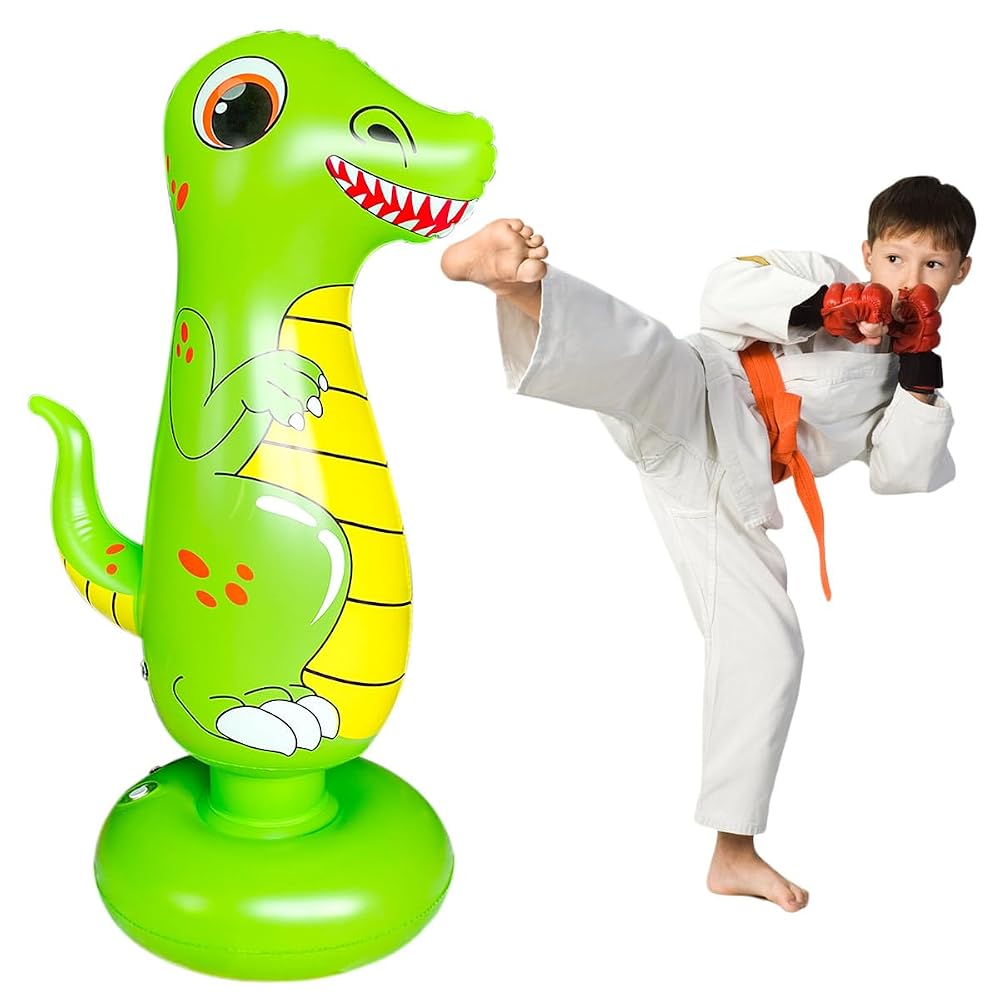
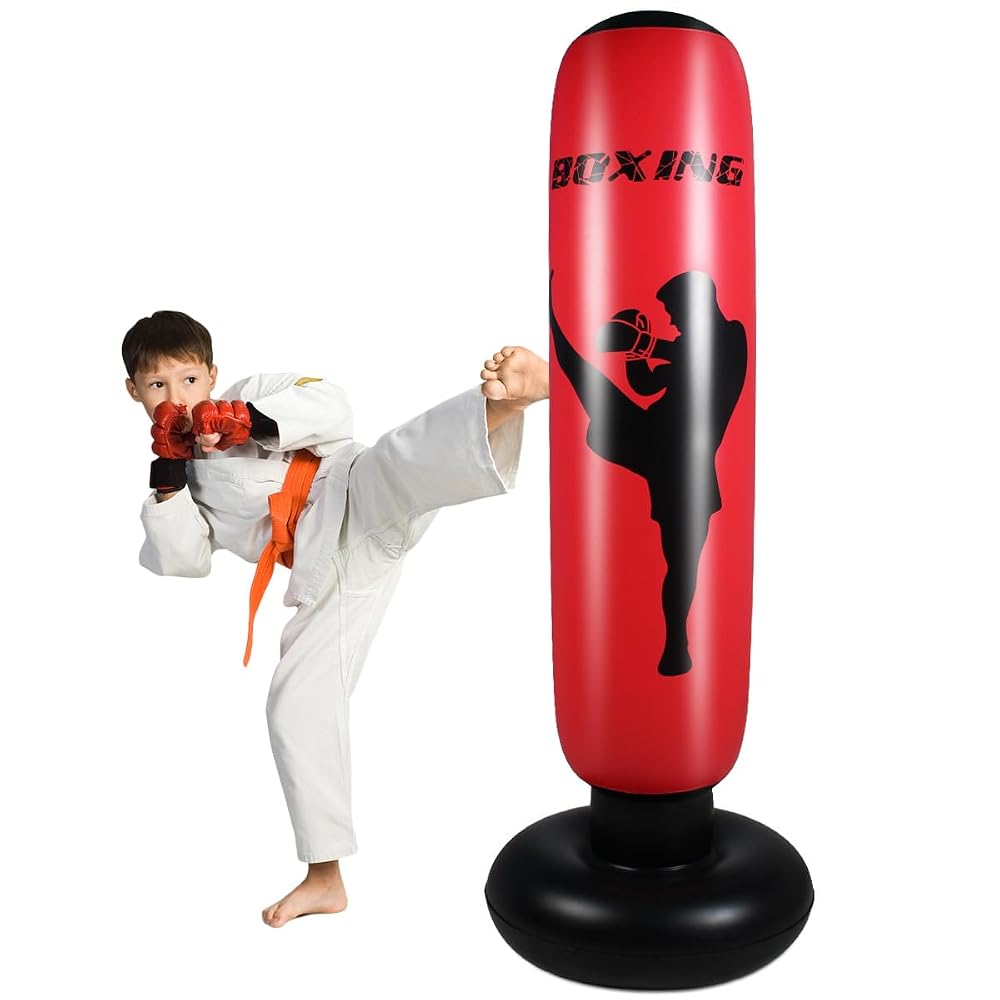
This is the smallest shelf in the catalogue and the easiest to explain. Everything here is built around the same trick: a weighted base, a light body, and a return that is fast enough to keep a child interested. Fill the base with water for a softer, slower rebound, or with sand when you want the bag to stay planted and hit back harder.
The dinosaur bag is free standing and rigid enough to take real punches, which makes it the one we would pick for a child who has started classes and wants to practise form at home. The 67 inch inflatable bag is lighter and far more forgiving, built for the age where the point is energy rather than technique. Both fold down to almost nothing when the base is emptied, which is the argument for having one at all in a small house.
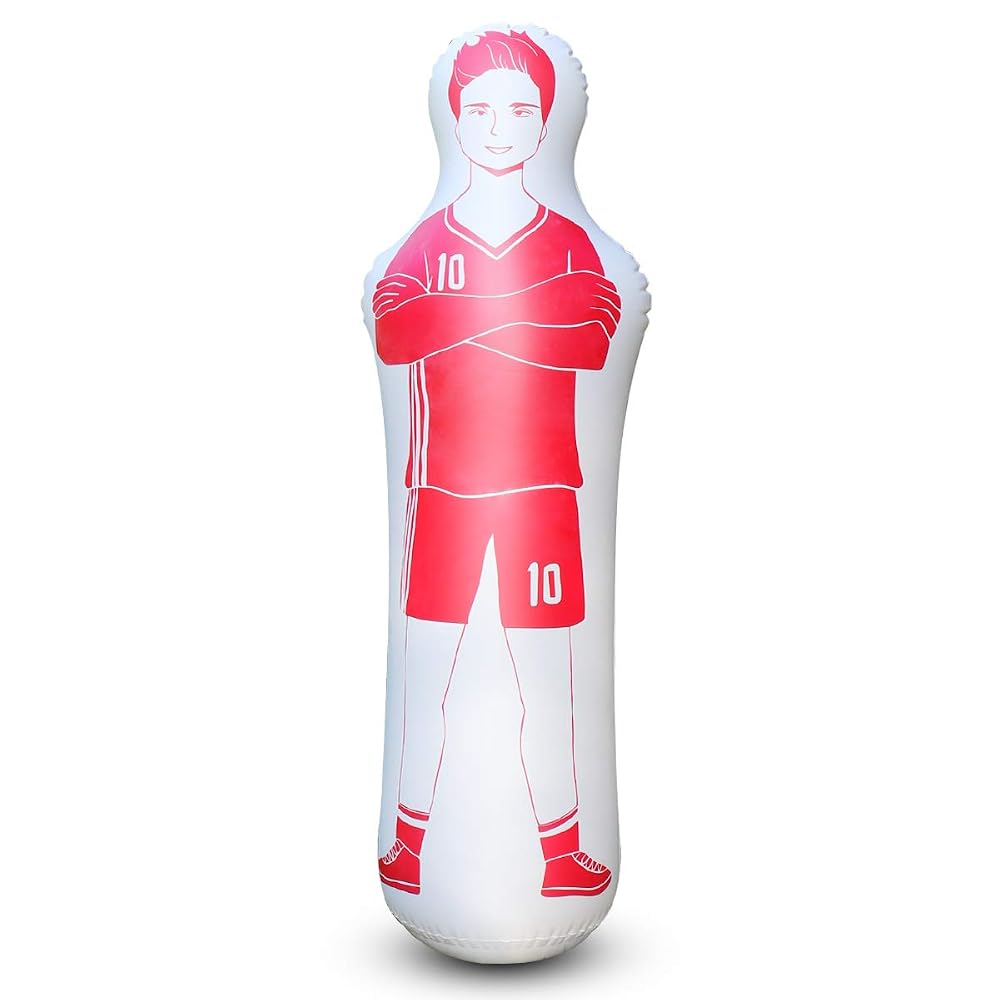
The tackling dummy belongs to a different sport but the same idea. At 63 inches it stands roughly chest high on an adult and head high on a young player, and it holds a position while you work on dribbling past it, passing around it or lining up a free kick. Coaches tend to buy several and set a wall; at home, one is enough to give a drill a shape.
Set up on a flat surface and leave a clear radius around the base, because a bag that returns fast will travel if the floor slopes. Check the cap on the base before every session, keep the body away from anything sharp, and let the air out before storing it for the winter rather than leaving it under pressure in a cold garage.
Heights, ages and how hard these are meant to be hit
The three bags here are sorted by height rather than by weight, because none of them is a boxing tool. Forty-eight inches suits a child of about five to eight, sixty-seven inches suits the ages either side of ten, and the sixty-three inch dummy is not for punching at all — it stands in for a defender while somebody runs at it.
Each one works the same way: air in the body, water or sand in the base. Get the base heavy and the bag plays fair, returning to upright instead of travelling across the room. Get it light and it walks, which is how lamps break. People reach for these as indoor activities on a wet afternoon, so the floor matters as much as the bag: a rug under the base, and a bigger clear radius than you think you need.
The standards we hold this shelf to are the same as everywhere else — brand-made, live price, a size printed on the listing. We would add one of our own here. These are toys. They are fun to hit with an open hand and they are not built for anyone training seriously, and any seller telling you otherwise is selling you a different thing. No assistant on a product page will say that out loud, so we will.
Questions about this shelf
Are inflatable punching bags any good?
For children under about ten, yes. They absorb a lot of energy, they cannot hurt anyone, and they pack away. For an older child working on technique, a free standing bag with a filled base gives far better feedback.
Should I fill the base with sand or water?
Water is easier to empty and gives a bouncier return. Sand is heavier, keeps the bag in place and suits harder hitting. Sand also stays put in freezing weather.
Can the tackling dummy be used indoors?
On a gym floor with room around it, yes. It is tall enough to catch a low ceiling, so measure before you inflate it.